

BETA Tech Achieves FAA Certification with $1B IPO and 600+ Unit Backlog
Thesis: Bullish on BETA Technologies
BETA Technologies (NYSE: BETA) stands at the forefront of electric aviation with the first FAA-certified production eCTOL/eVTOL aircraft (CX300), a backlog exceeding 600 units, and nearly $1 billion in fresh capital from its November 2025 IPO. Supported by strategic partnerships (GE Aerospace, UPS, U.S. Air Force, EXIM Bank) and a vertically integrated charging network, BETA is uniquely positioned to capture early market share in cargo, medical and defense air mobility. While the company remains unprofitable today, its rapid revenue growth, deep-pocketed investors and technological moat justify a bullish outlook for long-term investors willing to look past near-term losses.
Financial Health
BETA’s financial profile reflects a typical capital-intensive growth stage: accelerating top-line expansion but widening losses. The November 2025 IPO, which priced 29.85 million shares at $34.00, generated gross proceeds of roughly $1.015 billion (net ~$960 million after underwriting fees). These funds underpin production ramp-up, R&D and charging infrastructure deployment.
| Metric | H1 2024 | H1 2025 | Change |
|---|---|---|---|
| Revenue | $7.6 million | $15.6 million | +105% |
| Net Loss | $(137.0 m) | $(183.0 m) | –33% (wider loss) |
| Burn Multiple (Net Loss / Revenue) | 18× | 11.7× | Improved |
| Cash Proceeds (Nov 2025 IPO) | $960.2 million | – | |
| Outstanding Shares Post-IPO | 177.5 million | – |
• Revenue Growth and Profitability: Doubling of H1 2025 revenues over the prior year signals strong commercial traction with early adopters (UPS, United Therapeutics, military). Yet the net burn rate remains elevated at nearly $30 million per month, typical for an aerospace start-up scaling certification and manufacturing.
• Cash Flow Analysis: Operating cash flow is deeply negative as production lines expand. The IPO proceeds, combined with the $300 million GE investment, extend runway into late 2027, assuming current burn levels and no major capex overruns.
• Debt and Obligations: BETA carries minimal traditional debt. Federal financing via EXIM and Agility Prime contracts de-risk capital needs for charging stations and prototype development. No bond maturities or bank loans pressure the balance sheet.
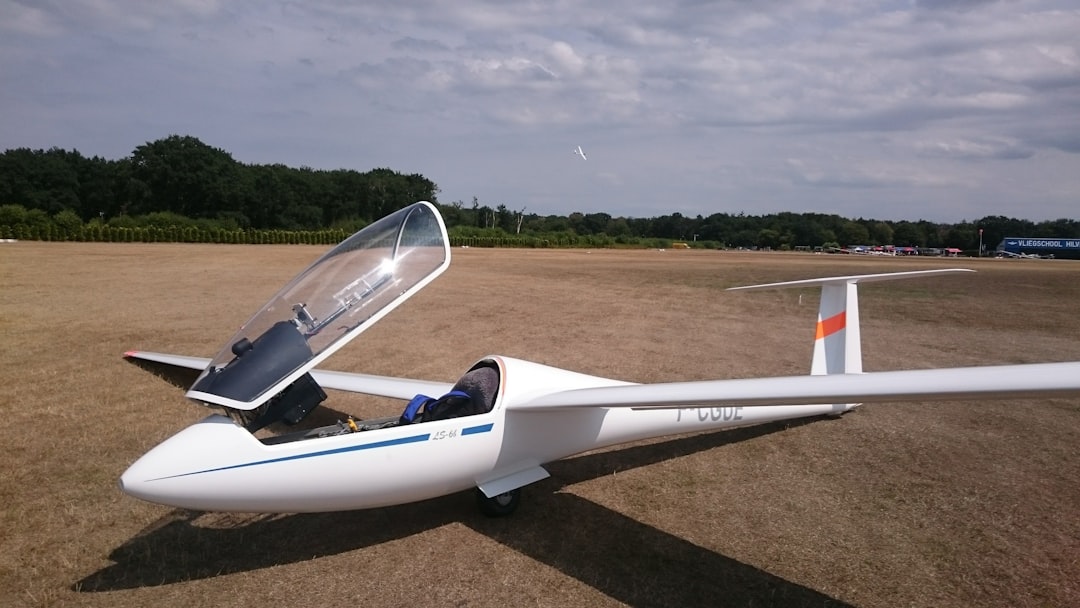
Electric Aviation by Roel Baardman
Competitive Position
BETA competes in an emerging electric aviation segment alongside Joby Aviation, Archer Aviation and Lilium, but differentiates itself with a focus on cargo, medical and military missions rather than urban air taxis.
• Market Share and Industry Position: BETA’s CX300 is the first production eCTOL certified by the FAA (Nov 2024), giving it a head start on commercial deliveries. Its backlog of over 600 aircraft across CTOL and VTOL configurations suggests market demand ahead of rivals still in prototype or pre-certification phases.
• Competitive Advantages: – FAA certification for production aircraft. – Integrated charging network and single-pilot IFR capability. – Best-in-class range (336 nm) and one-hour charge time. – 200 ft³ cargo capacity with 5-passenger flexibility. – 84% and 75% lower emissions vs. Bell 407 and Cessna 208, respectively.
• Barriers to Entry: Achieving FAA airworthiness certification, building a charging infrastructure and securing military contracts create significant hurdles for new entrants.
• Industry Trends: Electrification of short-haul flights, decarbonization mandates and logistical efficiency drives adoption of electric aircraft for organ transport, last-mile cargo and battlefield logistics.
Management and Corporate Governance
BETA’s leadership team combines aerospace engineers, pilots and seasoned financiers overseen by an experienced board.
• Leadership Track Record: Founder & CEO Kyle Clark, an engineer-pilot, learned to fly helicopters to conduct test flights. He leads a team that achieved the world’s heaviest eVTOL flight (Ava XC) and the first passenger-carrying electric aircraft flight (June 2025).
• Strategic Initiatives: – $300 million partnership with GE Aerospace to co-develop hybrid turbogenerators. – UPS contract for 10 A250 aircraft (option for 150 more) to integrate electric cargo transport. – U.S. Air Force Agility Prime program participant with first airworthiness certificate.
• Corporate Culture and Employee Quality: With 800+ employees in net-zero production facilities, BETA emphasizes hands-on prototyping, multidisciplinary collaboration and rapid iteration. The “misfits and tinkerers” ethos fuels innovation.
• Governance Practices: As a controlled company post-IPO, founder and insiders retain majority voting power (Kyle Clark controls ~62.6%), raising potential shareholder governance concerns. However, the 2025 Omnibus Incentive Plan aligns employee interests with shareholder value creation.
Risks and Opportunities
Balancing BETA’s potential against its challenges is critical for investors.
• Market Risks: Adoption curves for electric aircraft remain uncertain. Full commercial rollout depends on infrastructure buildout and regulatory approvals in multiple jurisdictions.
• Operational Risks: Scaling complex manufacturing in a capital-intensive industry can lead to delays, cost overruns and quality control issues.
• Regulatory Risks: Beyond FAA certification, BETA must navigate differing global standards, environmental regulations and air traffic integration.
• Growth Opportunities: – Organ transport (United Therapeutics contract of $48 million). – Expansion into passenger shuttle services (Blade Urban Air Mobility, Air New Zealand). – Military logistics and reconnaissance via Agility Prime and U.S. Army contracts. – Charging network licensing for electric ground vehicles and future third-party operators.
TL;DR
BETA Technologies offers a rare first-mover advantage in certified electric aircraft, backed by a $1 billion IPO in November 2025, a robust 600+ unit backlog, and marquee partners (GE, UPS, U.S. military). While losses remain significant—H1 2025 revenue of $15.6 million versus a net loss of $183 million—the company’s strong cash position, technological leadership and diversified go-to-market strategy support a bullish view for long-term investors prepared to weather near-term cash burn and execution risks.